
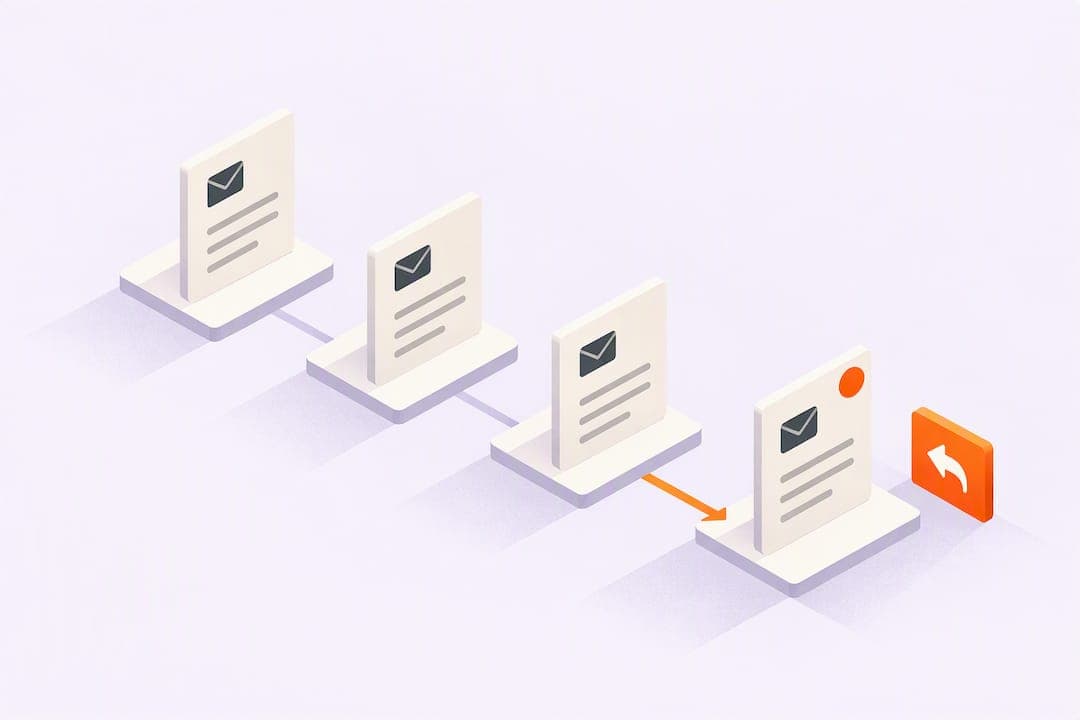
Send your first proposal follow up email two to three business days after you send the proposal, unless the buyer already gave you a review date. Plan for three to four touches total, spaced roughly a week apart, and add one new piece of value each time. If your tracking shows the buyer reopened the deck or lingered on pricing, follow up within 24 hours instead of waiting for your next scheduled touch.
TL;DR:
- Following up one to two days before a specified review deadline increases the chances of engagement compared to default timing.
- Tracking signals like reopening the deck or spending extended time on pricing should prompt a follow-up within 24 hours to capitalize on buyer interest.
- Limiting the follow-up sequence to three or four well-timed touches over two to three weeks preserves the relationship and prevents annoyance.
- Including specific references to the proposal section and offering one to two clear times for a call improves response rates.
- Using page-level engagement data to inform follow-up timing can significantly increase the likelihood of advancing the deal.
Table of Contents
- When to send each follow-up and how many attempts to make
- Message anatomy: subject lines, openers, and calls to action
- Three- to four-touch sequence with ready-to-adapt templates
- How proposal engagement data should change your timing
- How to end a no-reply sequence professionally
- Balancing persistence with respect using data
- WarmDoc: an option to get page-level engagement signals
- Sources
- FAQ
When to send each follow-up and how many attempts to make
Timing works best when it mirrors how people actually make decisions, not how eager you are to hear back. A buyer who just received your proposal needs time to read it, loop in a colleague, or check budget. Reaching out too soon reads as pressure. Waiting too long reads as indifference.
The most common cadence recommended across sales guidance is Day 3, Day 7, and Day 12 to 14. The Day 3 touch is a light check-in that assumes they simply haven't gotten to it. The Day 7 touch adds something new, since a second identical "just checking in" note tends to get ignored. The Day 12 to 14 touch is often the last substantive push before you shift into a close-the-loop message.

That default cadence shifts when the buyer tells you their process. If someone says they need two weeks to loop in finance, checking in on day 4 wastes a touch and signals you weren't listening. Instead, confirm their review process in the proposal-send email itself, then check in one to two days before their stated deadline rather than earlier.
Engagement data changes the calculus too. A prospect who reopens the deck after a week of silence, or spends unusual time on your pricing page, is telling you something without saying a word.
- If the buyer stated a review timeline, follow up one to two days before that deadline instead of the default cadence.
- If tracking shows a meaningful reopen or a long look at pricing, follow up within 24 hours to catch their attention while it's fresh.
- If the buyer asked for more time, delay your next touch to match their new timeline rather than sticking to Day 7.
- Cap the sequence at three to four attempts Beyond that, additional emails tend to annoy more than they persuade, and the close-the-loop message usually gets a better response than a fifth reminder would.
Stopping after a few value-adding emails over a few weeks helps respect the buyer's process and preserves the relationship. Either way, a graceful exit preserves the relationship better than an accusatory or overly persistent tone would.
Message anatomy: subject lines, openers, and calls to action
A follow-up that gets opened and read shares a few structural traits regardless of which touch it is in the sequence. The subject line sets the tone, the opener reminds them why you're writing, the body adds one new thing, and the close asks a single, easy question.
Subject lines work best when they're specific rather than generic. A few formulas that consistently perform well:
- "[Project name] proposal", which reads as a continuation rather than a cold pitch.
- "Re: [Project name], quick question", which works well as a reply within the original thread.
- "[Your company] proposal for [Buyer company]", useful for a first follow-up if you're starting a new thread.
Open with one line that ties back to your last conversation or the proposal itself, then point to the specific section most relevant to them. Rather than "I wanted to follow up on the proposal I sent," try referencing the exact problem they mentioned or the exact section (pricing, timeline, scope) most likely to matter to them right now.
Every touch after the first should add something the previous one didn't. That might be a short case study relevant to their industry, an answer to a question they raised in your last call, or a small adjustment to your proposed timeline. Repeating "just checking in" with no new information is the fastest way to train a prospect to ignore your emails.
Close with exactly one call to action, phrased as a single question, and offer one or two specific times if you're asking for a call. "Does Tuesday at 2pm or Wednesday at 10am work for a quick call?" gets answered far more often than "let me know if you have any questions."
Length matters more than most people think. Keeping follow-ups under about 80 to 120 words for most touches respects the reader's time and makes the email easy to scan on a phone between meetings.
Pro Tip: Write your follow-up before you send the original proposal, then trim it by a third. Most first drafts contain padding that a busy buyer will skip anyway.
Three- to four-touch sequence with ready-to-adapt templates
Here's a full sequence you can adapt, moving from soft check-in to final close-the-loop message. Each template assumes you're replying within the original email thread, which keeps your proposal attachment or trackable link visible in the conversation history.
-
First follow-up (Day 3, soft check-in). Subject: "[Project name] proposal." Body: "Hi [Name], wanted to check in on the proposal I sent over on [date]. Happy to answer any questions or jump on a quick call if it's helpful. Does later this week work, or would early next week be better?" This touch assumes good faith. It's short, low-pressure, and gives them an easy way to respond without committing to anything.
-
Second follow-up (Day 7, surface objections). Subject: "Re: [Project name], quick question." Body: "Hi [Name], following up on the proposal for [project]. One thing I wanted to flag: [address a likely concern, such as timeline flexibility or a specific line item]. Would it help to walk through that on a short call?" This works because a second identical check-in tends to get ignored, while naming a likely objection shows you're thinking about their situation, not just your close date.
-
Third follow-up (Day 12 to 14, add new value). Subject: "[Your company] proposal for [Buyer company]: quick update." Body: "Hi [Name], wanted to share a quick example: we recently helped a similar team solve [specific problem] using the approach outlined in section [X] of the proposal. Let me know if that's useful context, or if now isn't the right time." A brief, relevant case mention reframes the follow-up as useful information rather than a nudge, and it gives the buyer a reason to reopen the document.
-
Final close-the-loop message (around Day 14 to 21). Subject: "Should I close this out?" Body: "Hi [Name], I haven't heard back, so I'll assume the timing isn't right on your end for now. I'll close this out on my side, but feel free to reach out whenever it makes sense to revisit. Wishing you the best with [project or goal]." This kind of message often improves reply rates because it removes the awkwardness of saying no and gives the prospect permission to respond honestly, even if the answer is "not now."
A few practical notes on execution. Reply within the original thread rather than starting fresh each time, since that keeps your proposal visible and avoids making the recipient search their inbox. If you originally sent a PDF attachment, consider switching to a trackable link for your second or third touch. Links travel better inside an organization when a proposal gets forwarded to a colleague or decision maker, and they give you visibility an attachment can't. Keep edits tight: cut any sentence that doesn't either remind, add value, or ask a question.
How proposal engagement data should change your timing
The templates above work better when you're not guessing about interest. Trackable links behave differently than static attachments; instead of a black box, they show you what happens after you hit send, and they hold up better when a proposal gets passed along inside a buying committee, since the link keeps working (and keeps reporting) no matter who opens it next.
A few signals are worth watching closely, since they tend to precede a real decision:
- First view, which confirms the proposal reached the right inbox and was opened at all.
- A reopen after several days of silence, often a sign the buyer is revisiting the document ahead of an internal conversation.
- Extended time on the pricing or scope section, which usually means budget or scope questions are actively being discussed.
- Forwarding to another recipient, one of the clearest signs the proposal has moved into a wider evaluation.
The recommended action is straightforward: follow up within 24 hours of a meaningful reopen, and reference the specific section they viewed rather than sending a generic nudge. A message that says "saw you had a chance to look at the pricing section again, happy to walk through the options" lands very differently than a blind "just checking in."
Page-level tracking is what makes this possible in practice. Rather than telling you only that a document was opened, this level of detail shows which pages got attention and whether the deck was forwarded, so you can prioritize follow-ups based on real engagement instead of a guess.

How to end a no-reply sequence professionally
If you've sent three to four touches over two to three weeks with no response, it's time to close the loop rather than keep chasing. Around Day 14 to 21, depending on your cadence, send a short message that gives the prospect an easy out: "I'll assume now isn't the right time and will close this out on my end. Feel free to reach out whenever it makes sense to pick this back up." This kind of message tends to perform better than a fifth reminder because it removes the pressure to respond and often prompts an honest answer, even if that answer is no for now.
- Move unresponsive leads to a future-maybe list and revisit them on a quarterly or seasonal basis rather than emailing again immediately.
- If a prospect gave a verbal yes but the paperwork has stalled, skip the standard cadence and call the signer or procurement contact directly to unblock the signature.
- Avoid sending more than four touches total. Beyond that point, the risk of feeling pushy tends to outweigh any chance of a reply.
- Note the outcome in your CRM so the next outreach (if any) starts with context instead of repeating the same pitch cold.
A polite exit costs you nothing and keeps the door open. Many deals that go quiet for a month come back on the buyer's timeline, not yours.
Balancing persistence with respect using data
The instinct to send more emails, more often, usually backfires. A short, value-led sequence, four touches at most, each one adding something the last didn't, outperforms high-volume chasing because it respects the buyer's attention instead of testing their patience.
What actually separates a good follow-up strategy from a mediocre one isn't persistence. It's information. Knowing when someone reopened your deck or lingered on your pricing page turns a guess into a reason to reach out, and that context is what makes the fourth email land instead of getting deleted.
Measure your own follow-up process by reply-to-meeting rate and signed-proposal rate, not by how many emails you sent. And adjust the cadence to match what the buyer actually told you about their process. The templates and timing here are a strong default, not a script to follow blindly.
— Ty
WarmDoc: an option to get page-level engagement signals

Everything in this article gets easier when you can see what's actually happening after you hit send. WarmDoc gives sales, marketing, and customer success teams page-level analytics on every proposal or deck they share, along with forwarding detection and real-time notifications when a recipient engages. Instead of wondering whether your proposal was even opened, you see which sections got attention and whether it was passed along to another decision maker, which is exactly the kind of signal that should trigger a same-day follow-up rather than a generic Day 7 check-in.
Plans include a Free tier to start, along with Pro and Team options for teams that want deeper analytics across every deal in the pipeline. If your follow-up strategy depends on knowing when a prospect actually looked at your pricing page, that's the piece WarmDoc adds.
Sources
The timing rules in this article, including the Day 3, Day 7, and Day 12 to 14 cadence and the recommendation to cap sequences at three to four touches, draw on guidance from ProposalKit and Zoomforth. Template structure and subject-line formulas reflect examples from Salesloft and Daylite, particularly around brevity and single-question calls to action. The tracking and engagement-signal guidance is informed by how WarmDoc's page-level tracking works.
- Sales follow-up template guidance and sample follow-up emails | Salesloft
- Sample Follow-up Email to Client After Sending a Proposal | Daylite
FAQ
How soon should I follow up after sending a proposal?
Send your first follow-up two to three business days after sending the proposal if no review timeline was given. If the buyer stated a specific timeline, wait until one to two days before that date instead.
How can I politely ask for a follow-up email?
Reference the original proposal directly, add one new piece of value or information, and close with a single, low-friction question such as offering two specific times for a call. This structure respects the recipient's time while making it easy to respond.
How do I ask about a proposal's status?
Rather than asking "any updates?", reference a specific section of the proposal, such as pricing or timeline, and ask a direct question tied to it. This gives the recipient something concrete to respond to instead of a vague status check.
How do I politely follow up on an email that went unanswered?
Keep the tone light and give the recipient an easy way out, such as "let me know if now isn't the right time." A close-the-loop message that invites a "not now" response often gets replies where repeated check-ins do not.
How many times should I follow up on a proposal before stopping?
Most guidance recommends three to four follow-up touches spread over two to three weeks before sending a final close-the-loop message. Sending more than four increases the risk of feeling pushy without improving your odds of a reply.