
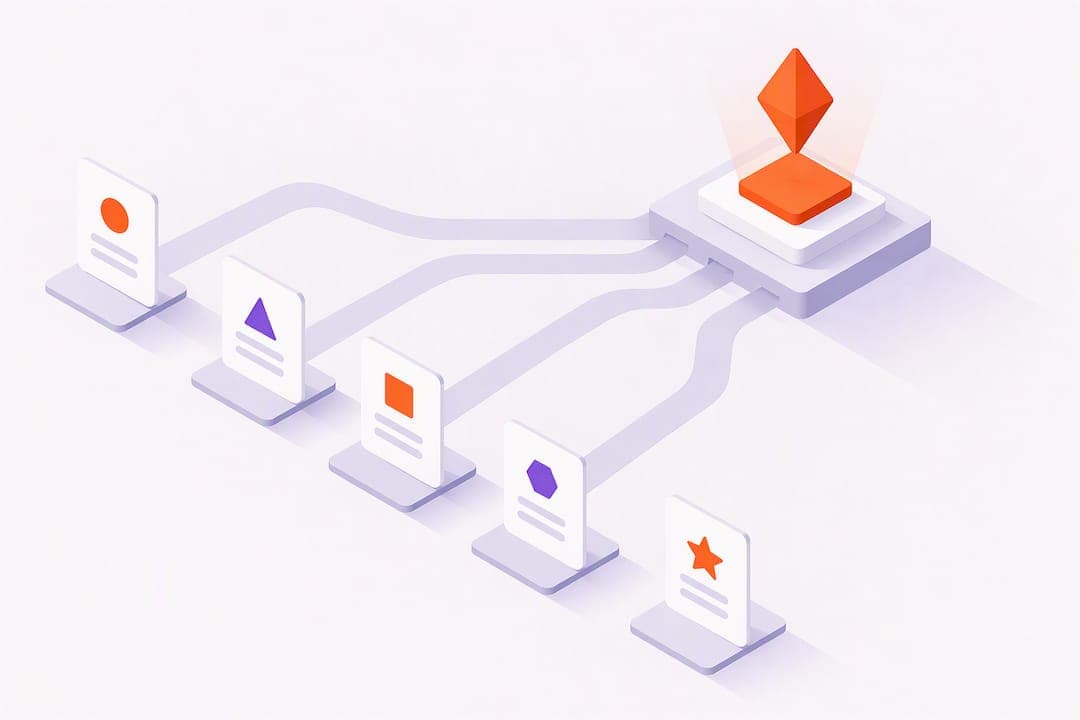
The strongest pitch alternatives fall into five categories: facilitated workshops, AI pitch analyzers, deck databases and templates, interactive demos or roleplay, and document-level engagement tracking. We recommend prioritizing whichever approach gives you a measurable buyer signal, something concrete to act on, rather than a one-shot presentation followed by silence. Tools like WarmDoc show how tracking page-by-page engagement turns a sent document into a prioritized follow-up list.
TL;DR:
- Workshops are effective early-stage tools for building client buy-in through collaborative problem-solving rather than one-way presentations.
- AI pitch analyzers enable rapid, multiple draft revisions but carry risks of data sensitivity issues and over-standardization.
- Deck templates and databases save time but require customization to prevent decks from sounding generic or disconnected from actual metrics.
- Document engagement tracking transforms post-sent analysis, highlighting sections read and forwarding activity to prioritize follow-ups effectively.
- The fastest, most cost-effective alternatives spread out effort and cost across drafting, rehearsing, and post-send follow-up, rather than relying solely on traditional live pitches.
Table of Contents
- At-a-glance alternatives and when to choose each
- Workshops and facilitated discovery sessions
- AI-driven pitch analyzers and automated slide critics
- Pitch deck databases, templates, and example libraries
- Interactive demos and video roleplay for presentation practice
- Data-driven follow-up using document-level analytics
- Comparing cost and time against the traditional pitch
- Choosing the right alternative for your business and goals
- Pitch alternatives in action
- Why measurable response beats a polished slide
- WarmDoc: a tool to measure engagement and prioritize follow-up
- FAQ
- Sources
At-a-glance alternatives and when to choose each
Each category solves a different problem, and picking the right one depends on where you are in the sales or fundraising process.
- Workshops work best in early discovery, when you need buy-in before you have a finished pitch; expect one to three sessions and moderate cost in facilitator time.
- AI pitch analyzers fit fast iteration cycles, scoring drafts in minutes so you can test wording and structure before a real meeting.
- Deck databases and templates help when you're starting from a blank page and need proven structure, with near-zero cost and same-day turnaround.
- Interactive demos and roleplay suit teams that pitch repeatedly and need consistent delivery, with setup taking a week or two.
- Document-level engagement tracking replaces guesswork after you send something, turning opens into ranked, actionable follow-up within days.
Most teams end up combining two or three: a template to draft faster, an analyzer to sharpen it, and tracking to know what happens after it leaves your inbox.
Workshops and facilitated discovery sessions
A paid workshop swaps the one-way pitch for a working session where you and the prospective client solve a real problem together. Instead of presenting a finished solution, you co-create one, which tends to build deeper buy-in than a slide deck ever could. Paid workshops are often used in place of a pitch to surface fit early, though they carry real risk if the scope isn't controlled.
- Benefit one: clients see how you think, not just what you've prepared.
- Benefit two: you gather real information instead of guessing at their priorities.
- Benefit three: a paid session filters out prospects who aren't serious.
The two common risks: clients can treat the workshop as free consulting, and multiple vendors sometimes run similar sessions in parallel, which strips away any competitive advantage you hoped to gain. Keep deliverables narrow, time-box the agenda, and put the scope in writing before you start.
Pro Tip: Charge for the workshop itself, even a nominal fee, so the engagement has a clear boundary and a clear end point.
AI-driven pitch analyzers and automated slide critics
Automated analyzers score a deck slide by slide, flag narrative gaps, and check whether your framing matches expectations for your funding stage or deal size. They're built for speed: upload a draft, get feedback in minutes, and revise before anyone outside your team sees it.
- Use them for rapid iteration when you're testing several versions of the same pitch.
- Use them to pre-screen decks before a real investor or buyer meeting.
- Use them to calibrate tone and structure across a sales team so everyone pitches at a similar standard.
The caution list matters just as much as the benefits. Uploading a deck to a third-party service means sharing sensitive numbers, so check data handling before you commit. Scoring models are often trained on a narrow sample of successful decks, which can push every pitch toward the same template and strip out context that made the original story work.
Pitch deck databases, templates, and example libraries
Curated libraries of real, funded pitch decks give you a fast way to see how other teams structured their story, ordered their slides, and presented metrics. They're a reference point, not a script.
- What they provide: slide order, typical metric placement, and examples of how traction gets framed at different stages.
- What to avoid: copying another company's claims, numbers, or specific language into your own deck.
- What to adjust: your own metrics, your own growth story, and the parts of the narrative that are specific to your business.
Before you send anything built from a template, run through a short checklist: confirm every number is yours and current, rewrite any sentence that sounds borrowed, and make sure the structure still fits your actual pitch length. A template should save you drafting time, not become a shortcut that makes your deck sound like everyone else's.
Interactive demos and video roleplay for presentation practice
Live demos, recorded walkthroughs, and roleplay sessions each replace a different part of the traditional pitch. A live demo shows the product in action instead of describing it on a slide. A recorded walkthrough, built with a tool like Google Slides' presenter view or an interactive framework such as reveal.js, lets prospects revisit the material on their own time. Roleplay sessions sharpen how your team handles objections before they happen in a real meeting.
- Record a practice run and score it against a short rubric: clarity, pacing, and objection handling.
- Rotate roleplay partners so no one gets used to a single style of pushback.
- Review recordings as a team monthly to keep delivery consistent across reps.
The payoff is consistency: every rep sounds prepared, not just the ones who happen to be naturally strong presenters.
Data-driven follow-up using document-level analytics
Once a deck or proposal leaves your inbox, the real question isn't whether it was opened, it's what happened after. Page-level engagement data answers that: which sections got attention, how long someone spent on your pricing page, and whether the document was forwarded to someone else at the company.
- Pages viewed and time spent show you which parts of your story actually landed.
- Forwarding activity often signals that a deck reached a decision maker you weren't in the room with.
- Repeat visits after the first open suggest active internal discussion, a stronger signal than a single open event.
A practical rollout looks like this: instrument every document you send, set alerts for high-engagement activity, connect the results to your CRM, and adjust your follow-up message based on which pages someone actually read. WarmDoc's feature set is built around exactly this workflow, flagging forwarded documents and ranking engagement so follow-up gets prioritized by real attention instead of a guess.
Pro Tip: Send your next proposal from your own inbox with tracking attached, then follow up only on the ones showing activity in the first 48 hours.
Comparing cost and time against the traditional pitch
A traditional pitch meeting demands a polished deck, rehearsal time, and a live slot on someone's calendar, often weeks out. Each of the alternatives trades some of that cost for something faster or cheaper.
Workshops cost more in facilitator hours upfront but can replace several rounds of back-and-forth pitch revisions. AI analyzers cut iteration time from days to minutes, since feedback arrives as soon as you upload a draft, though they add no cost beyond a subscription or per-use fee. Deck templates save the heaviest line item in deck creation, which is structural drafting time, letting a first draft come together in hours instead of days.
Interactive demos and roleplay cost more in setup, since someone has to build the rehearsal program, but they pay off over many pitches rather than just one. Document-level tracking has close to no setup cost relative to the others: you send what you were already sending, just with analytics attached, and the payoff shows up in follow-up accuracy rather than in the drafting phase.
The pattern across all five: alternatives either compress the time spent preparing a pitch or compress the time spent figuring out what to do after it's sent. Traditional pitching asks you to invest heavily in the single moment of delivery and then wait. The alternatives spread that investment across drafting, rehearsal, or post-send follow-up, wherever your actual bottleneck is.

Choosing the right alternative for your business and goals
The right pick depends on your sales motion, not on which method sounds most modern. A few questions narrow it down fast.
If you're pitching investors early and still shaping your narrative, a workshop or a deck database gives you structure and buy-in before the story is locked. If you're running a high-volume sales process with similar prospects, an AI analyzer and a roleplay program keep every rep's pitch consistent without a facilitator in the room each time. If you're already sending proposals and decks but struggling to know who to call back first, document-level tracking solves a different problem entirely: it's not about making the pitch better, it's about knowing what happened after you sent it.
Team size matters too. A solo founder benefits most from templates and analyzers, since they're fast and don't require a second person. A sales team of five or more gets more value from tracking and roleplay, because consistency across reps becomes the bigger issue than any single pitch's quality.
Budget and timeline close the decision. If you need something ready this week, templates and analyzers move fastest. If you can invest a few weeks, workshops and a rehearsal program pay off over a longer sales cycle. If your real gap is follow-up discipline rather than pitch quality, tracking is the lowest-effort, fastest-to-value option on the list.

Pitch alternatives in action
A deck built from a curated template library skips the structural guesswork that usually eats the first draft, letting a founder spend revision time on the story instead of slide order. A sales rep who records a roleplay session before a big call tends to handle objections more smoothly, because the first time they hear the pushback isn't in front of the prospect.
A team running an AI analyzer on three draft versions before a pitch meeting often catches narrative gaps that are invisible after you've stared at the same slides for a week. A paid discovery workshop, run with a narrow scope and a signed agreement, can surface a client's real priorities faster than three rounds of unanswered pitch emails.
And a sales team instrumenting every proposal with page-level tracking stops guessing which of twenty sent decks deserves a follow-up call today. When a prospect reopens a pricing page twice in one afternoon or forwards a deck to a colleague, that's a concrete reason to call, not a hunch. WarmDoc's customer stories describe this shift directly: engagement data replacing the old habit of following up with everyone on the same schedule regardless of actual interest.
Across all of these, the common thread isn't a clever new format. It's a feedback loop: something in the process produces a signal, and that signal tells you what to do next.
Why measurable response beats a polished slide
Most teams spend their energy polishing the pitch itself: tighter slides, a sharper hook, one more rehearsal. I'd argue that's the wrong place to put the effort once your deck is reasonably solid. The bigger gap is usually what happens after you hit send, when most teams have no idea whether anyone beyond the first reader ever saw the thing.
Pick one alternative, run it for two weeks, and measure what changes. A workshop either surfaces real buy-in or it doesn't. An analyzer either sharpens your draft or it's noise. Tracking either tells you who to call first or it doesn't. Stop guessing and start measuring.
— Ty
WarmDoc: a tool to measure engagement and prioritize follow-up
Sending a deck and waiting is the weakest part of most pitch processes, since a simple "opened" notification tells you almost nothing about real interest. We built WarmDoc around page-level analytics that show exactly which sections someone read, how long they stayed, and whether the document got forwarded to a decision maker you never met.

That level of detail lets sales, marketing, and customer success teams prioritize follow-up based on real attention instead of a flat list of names. We offer a Free plan to start, Pro and Team plans with monthly and annual pricing available. Check our website for current details. Check current plans and pricing or see how the tracking works to start turning your next sent document into a prioritized call list.
FAQ
What is another word for a sales or startup pitch?
Common alternatives include "proposal," "presentation," "deck," or "pitch deck," depending on context. In fundraising specifically, "investor deck" is the standard term for the document version of a pitch.
What are examples of a pitch?
Examples include an investor pitch deck, a sales proposal sent to a prospective client, a product demo during a sales call, and a short elevator pitch delivered in person. Each serves the same core purpose: convincing someone to take the next step, whether that's funding, buying, or scheduling another meeting.
How many types of pitch are there?
There's no single official count, since pitch formats vary by industry and audience, but common types include the elevator pitch, the investor pitch deck, the sales proposal, and the live product demo. Workshops, interactive demos, and tracked documents serve as alternatives to these traditional formats rather than as a sixth fixed category.
What makes a strong pitch deck structure?
Strong decks typically follow a clear order: problem, solution, market, traction, team, and ask, drawing on patterns seen across curated example libraries of funded decks. The specific numbers and story should always be your own rather than copied from an example.
How do I know if my pitch is actually landing with someone?
Document-level analytics such as page views, time spent per section, and forwarding activity reveal engagement a simple "opened" notification can't show. Tools like WarmDoc report this activity so you can follow up based on real signals rather than guessing which prospects are actually interested.
Sources
- Present slides - Computer - Google Docs Editors Help
- The HTML presentation framework | reveal.js
- Workshops: Better or Worse Than a Paid Pitch?